Deep Dive
How To Grow Muscle and Look Like The Fittest On Earth
You’re crushing your workouts, pushing hard through demanding metcons, and giving it everything during high-intensity sessions.
But despite your consistency, your physique doesn’t fully reflect the work you’re putting in.
You’re fit, and you’re strong but you’re not seeing that lean, muscular build you imagined.
CrossFit is one of the best training methods there is and ways to develop functional fitness, yet it’s not specifically designed to maximize muscle growth.
Its constantly varied workouts and performance-first programming are geared toward overall work capacity not hypertrophy (muscle building).
The reality is however 99% of folks (and my clients) in CrossFit gyms want to look better in addition to being fitter.
If your goal is to add muscle while maintaining CrossFit performance, the solution is to combine your current training with proven muscle-building strategies.
That means incorporating optimal rep ranges, targeted accessory lifts, and training methods that stimulate hypertrophy.
Blending functional bodybuilding into your weekly program lets you build muscle without sacrificing conditioning.
Striking a balance between strength, endurance, and aesthetics.
Why CrossFit Alone Won’t Maximize Muscle Growth
Can you build muscle training CrossFit…yes, but not as efficiently as if you use bodybuilding principles.
CrossFit improves work capacity, movement efficiency, and overall athleticism.
But because the emphasis is on performance over aesthetics, workouts often favor intensity and endurance over sustained muscle tension.
Olympic lifts and barbell movements develop power, but they often lack the controlled tempo and time under tension needed for hypertrophy.
The constant variation in programming also means you may not get enough consistent, muscle-specific volume essential for growth in targeted areas.
On the other hand, bodybuilding-style training uses higher volume, isolation work, and slower tempos to keep muscles under tension for longer.
CrossFit typically doesn’t include as much eccentric-focused lifting or accessory isolation work both of which are important for muscle development.
That’s why the best approach for building muscle without losing CrossFit performance is to combine the two styles using the steps below.
Step 1: Schedule 1–2 Functional Bodybuilding Sessions Weekly
Most CrossFit programs don’t provide enough targeted volume for maximum hypertrophy.
By setting aside one or two days for functional bodybuilding, you can hit specific muscle groups with controlled movements, progressive overload, and purposeful volume.
Unlike pure bodybuilding, which can sometimes reduce athleticism, functional bodybuilding keeps movements performance-focused while still prioritizing muscle growth.
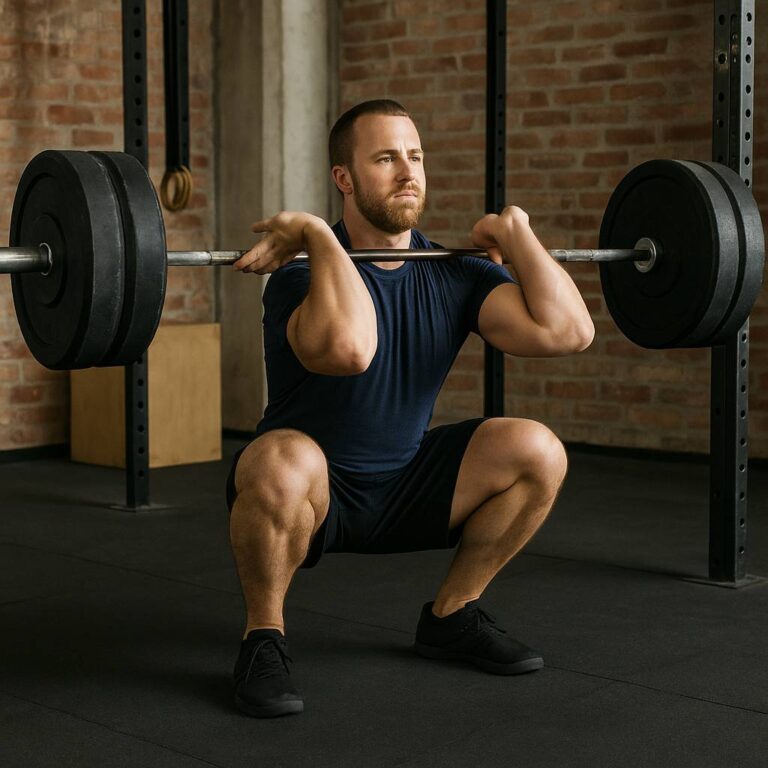
To make these sessions count, use slower tempos, controlled eccentrics, and compound lifts like squats, presses, and deadlifts.
Pause under tension to engage more muscle fibers and stimulate greater growth.
Within weeks, you’ll notice better definition, strength, and control in your movements.
Step 2: Use Moderate–Low Reps and Higher Sets
If you want size and strength, moderate-to-low reps with higher sets are key.
This approach promotes myofibril hypertrophy building denser, more powerful muscle fibers.
Both heavy, low-rep training and moderate-rep, high-set work contribute to growth.
Mixing both ensures you’re not just bigger but also stronger.
For big lifts, work in the 6–8 rep range for 4–6 sets at roughly 70–85% of your 1RM.
This builds strength while still encouraging muscle growth.
Progress by adding weight or reps weekly.
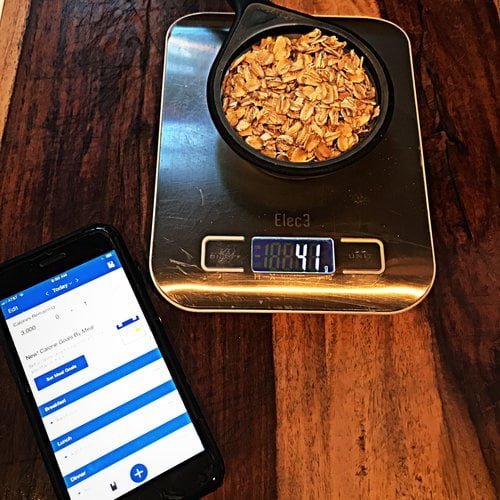
Step 3: Boost Protein Intake (1.4–2.0+ g/kg Bodyweight)
Protein is non-negotiable for recovery and muscle building.
CrossFit’s intensity and volume demand higher protein to repair muscle fibers and promote hypertrophy.
Aim for 1.4–2.0+ grams per kilogram of body weight per day.
This ensures a steady flow of amino acids for repair, growth, and recovery.
Animal-based proteins like chicken, beef, eggs, and dairy offer all essential amino acids.
Plant-based athletes can rely on tofu, tempeh, legumes, and plant-based protein powders.
Aim for 20–40 grams per meal, spaced over 4–5 meals daily, to maximize protein synthesis.
Step 4: Add Accessory Lifts After MetCons
Isolation work after your WOD can help lagging muscle groups catch up.
Because CrossFit prioritizes compound lifts, smaller muscles often get minimal direct stimulus.
Adding 2–3 isolation moves after class is a simple fix.
Example:
- 3×12 bicep curls
- 3×12 tricep extensions
- 3×12 lateral raises
These moves won’t drain your system but will give those muscles the focused work they need to grow.
Step 5: Treat Sleep as a Training Tool
Sleep might be the most overlooked factor in building muscle.
Without 7–9 hours of quality rest, your recovery, strength gains, and muscle growth will stall.
Poor sleep decreases protein synthesis, raises cortisol, and slows recovery, as well as increases injury risk by impairing motor control.
To improve sleep:
- Avoid screens 30–60 minutes before bed to protect melatonin production
- Keep a consistent sleep/wake schedule even on weekends.
- Limit caffeine in the afternoon.
- Make your room dark, cool, and quiet.
Wrapping Up On Building Muscle in CrossFit
If you’re serious about building muscle as a CrossFit athlete, small but strategic changes to your training can make all the difference.
By layering functional bodybuilding principles onto CrossFit’s foundation, you can develop a physique that performs as well as it looks.
Follow the steps above, and you’ll bridge the gap between elite performance and impressive muscle development!