Deep Dive
4 Strategies to Train for Muscle Mass Using CrossFit
If you’re training for muscle growth, you don’t need to give up CrossFit.
You just need a more focused approach.
CrossFit offers plenty of tools that can support hypertrophy when applied correctly.
The key is learning how to adjust your training without abandoning the movements, structure, or intensity that you enjoy.
Many of my clients want to train CrossFit to be functionally fit, but they also want to look as good as they can.
This article will walk you through how to do exactly that.
You’ll learn how to prioritize mechanical tension, manage fatigue, and structure your training so that it supports muscle growth while still aligning with CrossFit principles.
Why Building Muscle Requires a Shift in Your Training Focus
Most CrossFit programming is designed to improve general physical preparedness, develop skill capacity, and increase conditioning.
These goals don’t always match what your body needs to stimulate muscle growth.
CrossFit workouts usually include high-intensity, constantly varied sessions that are great for building work capacity but don’t always provide the structure required for hypertrophy.
If you’re relying only on these workouts, you may assume the effort alone will drive muscle gains.
That’s a common mistake.
Hypertrophy training requires more than intensity.
It depends on consistent volume, repeatable movements, and progressive overload.
These principles often get missed in traditional WODs where movement patterns change frequently and load selection is inconsistent.
To grow muscle, your training needs to include multiple sets near failure within the right rep ranges and use movements that target specific muscle groups repeatedly across the week.
Without this structure, you’re likely doing enough to maintain or slightly improve muscle mass, but not enough to consistently build it.
Intentional programming and progression are essential if you’re serious about hypertrophy.
The Problem with Relying on Classic WODs Alone
Traditional CrossFit MetCons are built around variety and intensity, but those same strengths become weaknesses when your goal is muscle growth.
Randomized programming often skips the consistent, repeated exposure a muscle group needs to grow.
A WOD might include pull-ups on Monday and not touch your back again until the following week.
That lack of volume and frequency limits hypertrophy.
MetCons also push you to move quickly under fatigue, which often reduces the mechanical tension on the muscle, a key driver of growth.
When you’re racing the clock, tempo usually disappears.
You may finish a workout exhausted, but the muscles didn’t get the slow, controlled, near-failure work they need.
Over time, this creates a mismatch: you’re training hard but not building the physique you’re working for.
What Happens If You Keep Training This Way
When your training constantly prioritizes intensity over stimulus, you end up working hard without seeing the muscle gains you want.
You might feel fitter and stay relatively lean, but building visible muscle becomes a slow, frustrating process.
Some people may see some good muscle gains initially with CrossFit if they are new to any sort of resistance training.
But even if you do put on some muscle mass, you likely won’t be doing so at an optimal rate.
And who wants to wait longer to reach the physique goals they have?
Additionally, you’re often more fatigued than necessary.
You’re sore, worn down, and pushing hard but with little to show for it.
That’s when the frustration hits.
You’re giving full effort, but without a hypertrophy-focused approach, it doesn’t translate into the progress you want in the mirror.
The 4-Part Strategy to Build Muscle With CrossFit
1. Blend Strength Work With Hypertrophy Volume
The best way to build muscle while staying true to CrossFit is to pair heavy strength work with hypertrophy-focused accessories.
Start your session with low-rep strength work (sets of 3–5 reps) using compound lifts like squats, presses, or pulls.
This builds neurological drive and primes the system for strength.
Follow that up with 2–3 hypertrophy movements in the 8–15 rep range.
These should target the same muscles but with more volume and control.
Think: back squats followed by Bulgarian split squats and Romanian deadlifts.
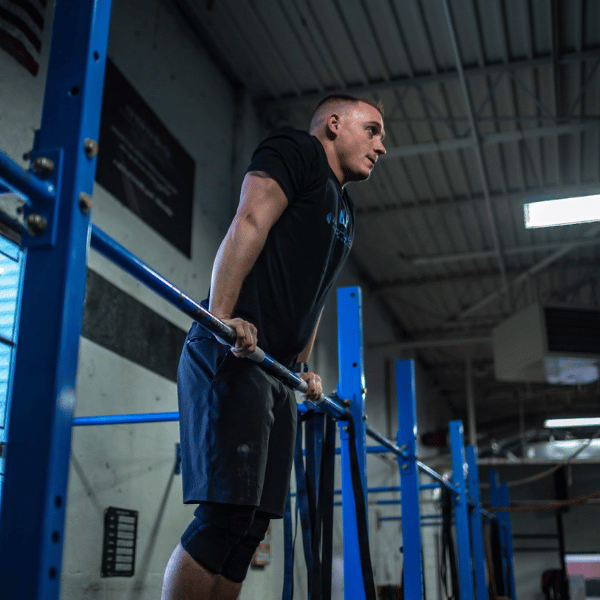
Or bench press followed by dumbbell floor presses and ring dips.
The goal is to accumulate roughly 15–20 hard sets per muscle group each week spread across your training days.
This blend of strength and volume creates the ideal stimulus for growth without abandoning the CrossFit feel.
2. Slow Down and Control Movement Tempo
Hypertrophy responds well to time under tension.
That means slowing things down.
A controlled tempo, such as 3 seconds on the way down, a 1-second pause, then a fast concentric, keeps the muscles working longer and building muscular tension and fatigue.
Tempo work also improves movement quality and reinforces solid positioning, which benefits both muscle growth and long-term performance.
Use tempo with bodyweight movements like push-ups and pull-ups, or in accessory lifts like goblet squats and DB rows.
You don’t need to increase load to make gains, controlling tempo increases the challenge and stimulus without frying your central nervous system.
3. Modify or Replace WODs to Favor Hypertrophy
Classic MetCons prioritize intensity and speed, but hypertrophy needs quality and control.
One simple fix: shift some WODs from “for time” to “for quality” or use EMOM formats that give you rest and allow for consistent effort.
Instead of high-rep kipping pull-ups, perform 4 sets of 8 weighted strict pull-ups with rest between sets.
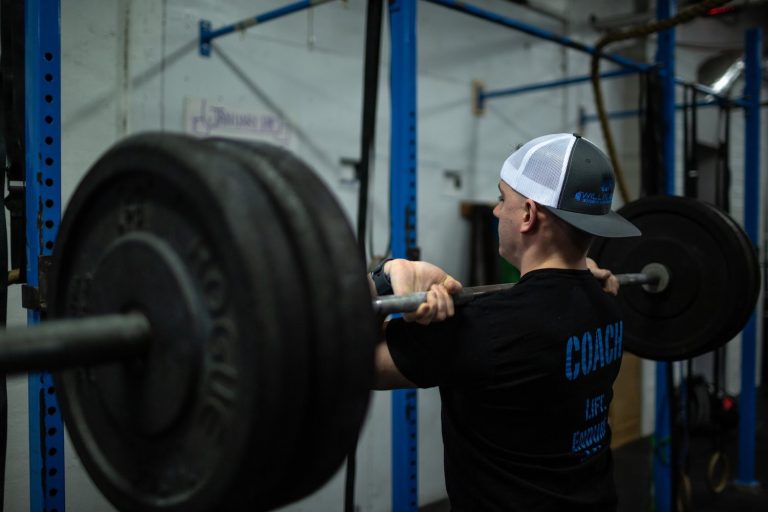
Rather than rushing through light thrusters, use moderate-weight front squats with pauses to maintain tension.
Structure resistance training to allow for adequate load, reps to (near) failure, and sufficient rest times.
Choose movements that let you feel the muscle working through a full range of motion strict presses, single-arm rows, lunges, and tempo push-ups work well.
Even a short conditioning finisher can be hypertrophy-friendly if you emphasize movement quality and tension over speed.
You’ll still get some work capacity work in, but your muscles will grow, too.
4. Prioritize Recovery and Nutrition
Training breaks down muscle. Recovery builds it.
If you’re pushing intensity day after day without recovering, muscle growth stalls.
Aim for ~1 gram of protein per pound of bodyweight daily, prioritize 7–9 hours of quality sleep, and stay hydrated.
These basic habits drive results more than supplements or fancy tools.
Creatine monohydrate can support strength and muscle gain.
Intra-workout carbs (like a sports drink) may help if you’re doing long sessions.
But they only work if your foundational recovery is solid.
Also, don’t underestimate the importance of managing training volume and stress. Building muscle requires energy and recovery capacity.
Training hard is good, but training smart is better.
Wrapping Up on CrossFit for Muscle Mass
You don’t need to quit CrossFit to build muscle; you just need to train with intention.
Structure your sessions to blend strength and volume.
Slow down your reps. Swap intensity for quality when needed.
Prioritize recovery like your progress depends on it, because it does.
If you want to start building muscle mass with your engine, try making one small adjustment this week and track how you progress.