Deep Dive
How to Fix Your Clean & Jerk for Optimal Performance
Mastering your clean and jerk technique is essential for achieving efficient, powerful lifts and minimizing the risk of injury.
Whether you’re new to weightlifting or looking to fine-tune your form, understanding common faults can make a significant difference in your performance.
This article will walk you through five frequent clean and jerk mistakes, offering practical fixes for each one.
Addressing these faults will build a more stable, efficient foundation for your lifts, allowing you to generate greater force, control the bar more effectively, and increase your overall strength and confidence in the movement.
1. Poor Setup and First Pull
If your setup is inconsistent or misaligned, you’ll struggle to maintain a strong, effective first pull.
An improper setup often causes the bar to drift too far from your body, which reduces the amount of force you’re able to generate from the floor.
When the barbell isn’t kept close to your body, your lift becomes less efficient, making it harder to accelerate the bar during the clean.
How to Fix:
Start with a Static Position: To ensure stability, use a static start position—hold the setup for 1-2 seconds before initiating the lift.
By taking a moment to establish a solid foundation, you’ll improve your control over the bar and set yourself up for a strong, efficient pull.
Practice Clean Lift-Offs and Clean Pulls: These movements help you reinforce the mechanics of an ideal first pull.
Practicing lift-offs (lifting the bar to knee level) and clean pulls (lifting from the floor through the full pull motion) will strengthen your start position and develop consistency in your setup.
Focus on Bar Positioning Over the Mid-Foot: Proper bar placement is essential for force application.
When setting up, make sure the bar is positioned directly over the mid-foot, ideally at the metatarsal-phalangeal joint.
This alignment optimizes your force output and keeps the bar close to your body, allowing you to generate maximum power through the entire lift.
By correcting these elements in your setup, you’ll create a stable foundation and significantly increase your ability to generate force in the clean and jerk.
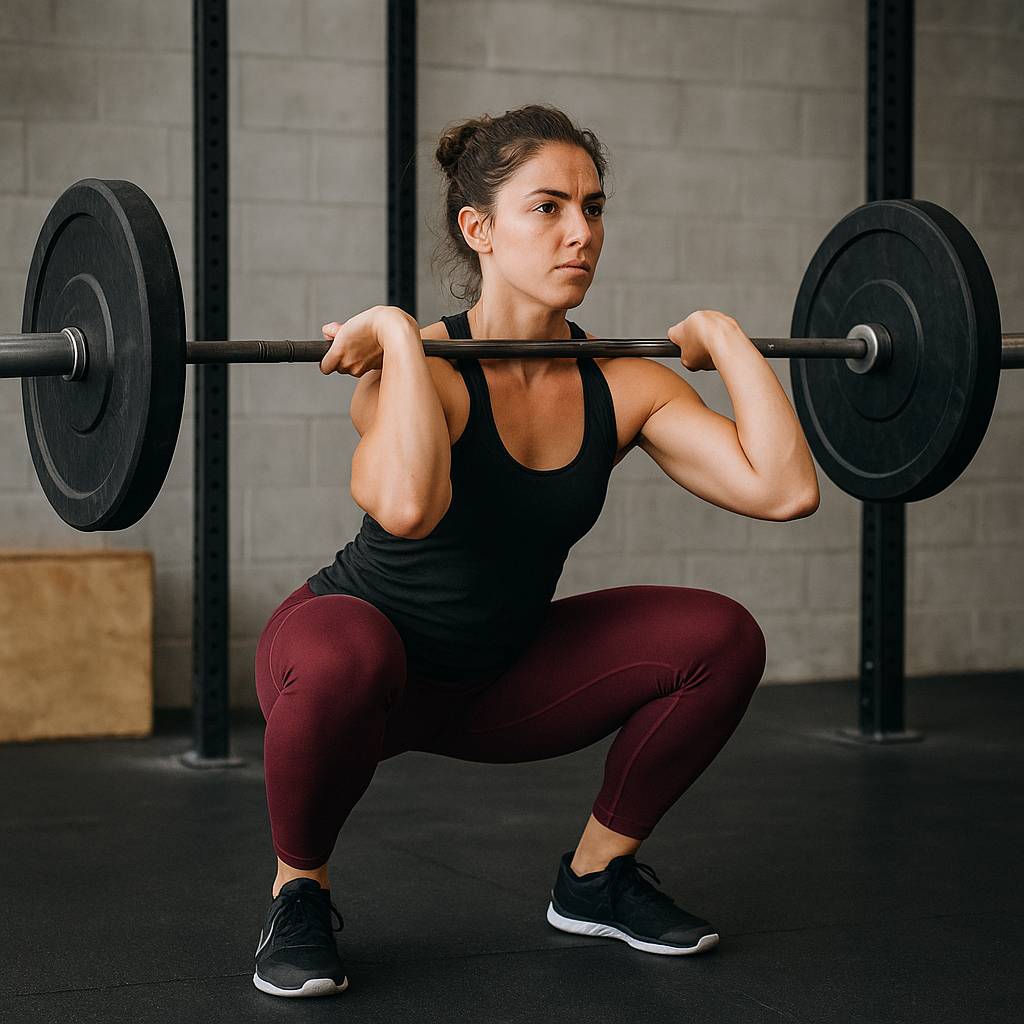
2. Losing Tension in the Catch
Losing tension in your core and back during the catch phase can make your front squat less efficient and lead to an unstable lift.
When you fail to maintain tightness in this position, the bar tends to “crash” onto your shoulders, disrupting your balance and forcing you into an uncomfortable bottom position.
This loss of tension makes it harder to stand up with the weight, impacting the stability and power of the clean.
How to Fix:
Catch the Bar Slightly Above the Bottom of the Squat: Avoid dropping straight into a deep squat in the catch, as this can lead to a “crash” effect.
Instead, catch the bar slightly higher, allowing you to control the descent and maintain better balance.
Practice Muscle Cleans and Hang Cleans: Muscle cleans and hang cleans are great tools for refining your pull-to-catch transition.
These movements help you become more comfortable receiving the bar without losing tension, building a more stable front rack position.
Maintain Core and Back Tension: Throughout the movement, focus on keeping your core and back engaged.
Visualize bracing your midline as you receive the bar, ensuring you stay tight and avoid collapsing in the catch.
A strong, stable torso will make the transition smoother and provide a more solid foundation for the front squat.
3. Poor Dip and Drive in the Jerk
The dip and drive phase of the jerk is crucial for generating upward momentum.
Faults like dipping too quickly, leaning forward, or losing balance can interrupt the power transfer from your legs to your arms, resulting in a weak or misdirected lift.
These issues often stem from poor alignment or rushing through the dip, leading to inefficient power application and missed lifts.
How to Fix:
Pause Between the Clean and Jerk: After completing the clean, take a brief moment to reset.
This pause helps you align your posture, ensuring your feet and torso are in the right position before initiating the dip.
By resetting, you’re setting a solid foundation to maximize power in the jerk.
Maintain Weight Distribution Over the Ankles: During the dip, focus on keeping your weight centered over your ankle bones, avoiding any forward lean.
This balanced position enables a smooth drive straight upward and allows for optimal power transfer from legs to arms.
Practice Jerk Balances and Jerk Drives: Jerk balances and drives are helpful drills for refining your dip and drive mechanics.
They teach you to stay balanced and develop strength in the drive, enabling a more controlled and powerful upward push during the jerk phase.
These exercises help ingrain proper form, ensuring you’re able to translate leg power effectively through the bar.
4. Early Bend of the Elbows
Bending your elbows too early during the pull reduces power by shifting focus from your legs to your arms.
This habit makes the lift less efficient and can limit the amount of force you’re able to generate from the ground up, affecting both height and control of the bar during the lift.
Research shows that straighter arms in the pull phase can enhance lift performance.
This helps top weightlifters achieve optimal bar path and power, improving overall lift efficiency.
How to Fix:
Keep Arms Straight and Relaxed: Focus on keeping your arms straight during the first and second pulls to fully engage your legs and hips.
Relaxed arms help maintain tension where it’s most effective—your legs.
Use Cues like “Push the Floor Away” or “Leg Press the Earth”: These cues remind you to drive with your legs rather than pulling with your arms.
Visualizing a strong, forceful leg drive helps keep your arms passive until it’s time to transition.
Practice Clean Pulls, Clean Deadlifts, and Sotts Presses: Clean pulls and clean deadlifts with emphasis on straight arms reinforce proper arm position in the pull phase.
Sotts presses are also helpful for reinforcing upper body alignment and coordination.
5. Not Using a Hook Grip
Not using a hook grip (thumbs wrapped under the fingers) can cause you to lose grip on the bar, particularly during heavy lifts or as you fatigue.
The hook grip stabilizes your grip, allowing you to handle more weight without sacrificing control, which is essential for maintaining technique and safety.
How to Fix:
Start with Lighter Weights to Build Comfort: Begin practicing the hook grip with lighter loads to gradually get used to the feel, minimizing initial discomfort.
Use Athletic Tape on Thumbs: Wrapping your thumbs with tape can reduce friction and make the hook grip more comfortable.
Practice Hook Grip Deadlifts and Pulls: Incorporating hook grip deadlifts and pulls into your routine will strengthen your grip and build greater bar control, making the hook grip feel more natural and stable as you progress to heavier weights.
Wrapping Up On The 5 Most Common C&J Faults
Fixing these common clean and jerk faults will significantly improve your performance and reduce injury risk.
By focusing on a proper setup and first pull, maintaining tension in the catch, perfecting the dip and drive in the jerk, keeping your arms straight, and utilizing a hook grip, you’ll see noticeable improvements in both power and efficiency.
Consistent practice of these techniques will help you perform more confidently and with better stability, allowing you to achieve stronger, more efficient lifts.
Keep working on these fixes, and you’ll elevate your clean and jerk to the next level.