Deep Dive
How To Improve Your Front Rack Position For Olympic Weightlifting
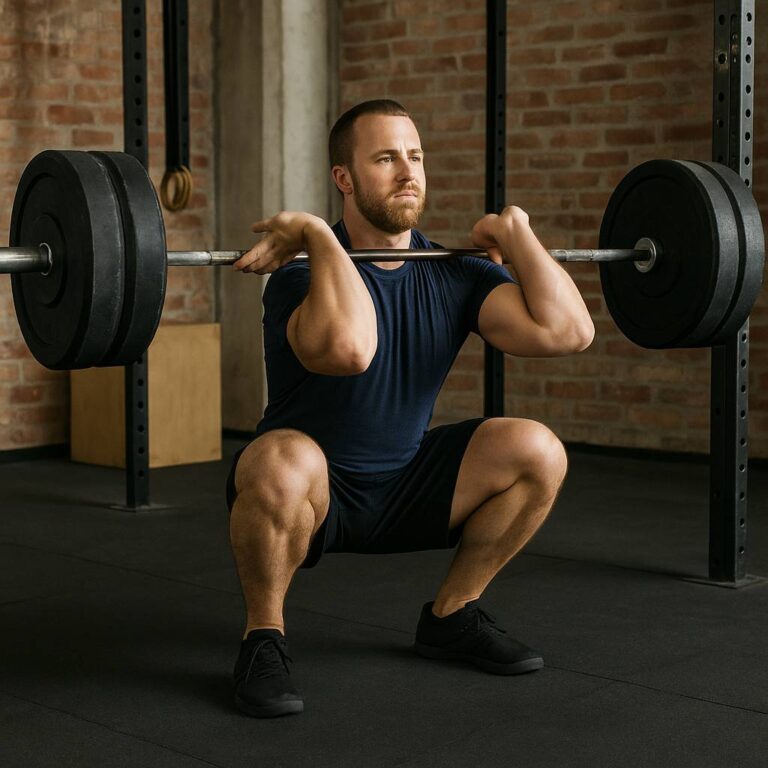
Your front rack position is a key component for many movements in CrossFit, Olympic weightlifting, and strength training.
Whether you’re hitting heavy cleans, performing front squats, or setting up for your jerk, a strong and mobile front rack sets the foundation for success.
But, achieving and maintaining this position often feels like a challenge.
Tight shoulders, limited wrist flexibility, and an inability to lift your elbows high enough can hold you back.
As a physical therapist and CrossFit coach, I routinely help my athletes improve their mobility and front rack positioning so they can hit new PRs and avoid upper-body joint issues..
Below are my go-to exercises for helping you improve your front rack position.
You’ll learn what they are, how to perform them, my traditional prescriptions, and how to integrate them into our training.
8 Mobility Exercises to Improve the Front Rack Position
Improving your front rack isn’t only about flexibility but working systematically to improve mobility, strength, and coordination across multiple joints.
These eight exercises are designed to address common limitations and build a strong, functional front rack.
Overhead Banded Lat Stretch
If tight lats are limiting your shoulder flexion, this stretch is your go-to.
How-To:
Anchor a resistance band overhead.
Grip the band firmly with one hand, then step back and lean away, feeling the stretch along your side and into your lat.
Shift your hips slightly to deepen the stretch.
Watch a demo video (HERE)
Prescription: Perform 2–3 sets of 30–60 seconds per side.
PVC Front Rack External Rotation Stretch
Shoulder external rotation is key to getting your elbows high in the front rack.
How-To:
Grip a PVC pipe with both hands, simulating your front rack grip.
Use the pipe to gently pull your shoulders into external rotation while keeping your elbows high.
Watch a demo video (HERE)
Prescription: Incorporate 2–3 sets of 30 seconds per each side.
PVC Prayer Stretch
For athletes struggling with thoracic extension, this stretch can work wonders.
How-To:
Kneel in front of a bench, place your elbows on the edge while gripping a PVC pipe, and push your chest downward toward the ground.
Keep your spine neutral to emphasize the thoracic stretch.
Watch a demo video (HERE)
Prescription: Do 2–3 sets of 30 seconds per side.
Thoracic Extension Over a Foam Roller
Unlocking thoracic mobility helps you keep your chest upright in the front rack.
How-To:
Lie on your back with a foam roller placed perpendicular to your upper spine.
Extend your back over the roller, keeping your hips down, and pause briefly at the top.
Watch a demo video (HERE)
Prescription: Perform 3–4 sets of 10 controlled extensions.
Overhead Banded Tricep Stretch
Tight triceps can prevent your elbows from staying high in the rack.
How-To:
Anchor a resistance band overhead.
Grab the band with one hand and pull your elbow behind your head, stretching the tricep and shoulder.
Watch a demo video (HERE)
Prescription: Hold for 30–60 seconds per arm, performing 2–3 sets.
Quadruped Wrist Extension Stretch
Wrist flexibility is crucial for a comfortable front rack grip.
How-To:
Get into a quadruped position with your palms on the ground, fingers pointing toward your knees.
Slowly lean back to stretch your wrists, keeping your arms straight.
Watch a demo video (HERE)
Prescription: Perform 3 sets of 30 seconds.
Banded Serratus Wall Slide
Shoulder stability and protraction ensure the bar stays secure on your delts.
How-To:
Wrap a resistance band around your wrists and press your hands against a wall.
Slide your hands upward while keeping the band taut, ensuring your shoulder blades move smoothly.
Watch a demo video (HERE)
Prescription: Incorporate 3 sets of 10 slow, controlled reps.
Front Rack Walkout Holds
Building strength in the front rack under load is as important as improving mobility.
How-To:
Set a barbell at 85% or more of your 1-rep max in the front rack position.
Or use a heavy, yolk, or kettlebells.
Step back from the rack and hold the bar for 10–20 seconds, maintaining an upright posture and high elbows.
Watch a demo video (HERE)
Prescription: Perform 3–5 sets with 1–2 minutes of rest between efforts.
These holds are ideal as a finishing drill for heavy lifting sessions.
Why the Front Rack Position Matters
Exercises like the front squat, clean, and jerk demand a stable front rack to keep the barbell secure and your lifts efficient.
When your front rack position is solid, you’re able to generate power, maintain balance, and minimize energy leaks throughout the lift.
However, when your mobility falls short, compensations sneak in.
Or you’ll dump the barbell forward.
You might find yourself overextending your lower back to keep the bar in place, which compromises your core stability and limits how much weight you can lift.
Or maybe you’re relying too much on your wrists to support the bar, leading to discomfort or strain.
It’s a multijoint position that requires mobility, strength, and coordination across multiple joints, including your shoulders, thoracic spine, and wrists.
When these areas work together seamlessly, you’re better equipped to move efficiently and avoid common frustrations like a rolling bar or awkward mechanics.
What Causes a Poor Front Rack?
If your front rack position feels tight, awkward or unstable, you’re likely facing one or more common mobility limitations.
Each constraint directly affects how well you can secure and move the barbell.
Limited thoracic spine extension prevents your upper back from straightening, pushing your shoulders and elbows down.
This forces the barbell forward and increases the strain on your wrists and lower back.
Poor shoulder flexion and external rotation mean your arms struggle to reach the ideal angle, causing compensations like dropped elbows or instability.
Tight lats and triceps restrict the mobility needed for your shoulders to move freely and your elbows to stay high.
Limited wrist flexibility impacts your grip, leading to pain or difficulty keeping the bar stable.
Core and upper back weakness reduces your ability to maintain an upright posture under load and causes the bar to roll forward.
Inadequate shoulder protraction and elevation (shoulder blade mobility) lead to an insecure bar placement on your delts.
By identifying and addressing your limitations through targeted mobility work, you’ll unlock a stronger, more efficient front rack position that supports better lift performance.
Incorporating Into Training
Building an efficient front rack position requires consistency.
Here are your options:
- Warm-Up: Add a few of these exercises into a warm-up each day.
- During Training: Pair mobility work, such as Thoracic Extensions over a Foam Roller, with main lifts.
- Post-Training: Include static stretches like the Overhead Banded Lat Stretch or Tricep Stretch when your muscles are warm.
Try programming these exercises as EMOMs, circuits, or standalone sets.
The best time to do them is the one you’ll be most consistent with.
I prefer to add them during or post-training to take advantage of warm and pliable muscles.
Wrapping Up on Improving Your Front Rack
A strong front rack position will unlock better performance and longevity in your training.
By addressing mobility limitations with regular, targeted work, you’ll quickly see improvements in strength and movement efficiency.
Commit to these exercises, and movement quality then watch the PRs roll in!
If you found this helpful and would like some help optimizing your training so that you can reach your goals faster, consider scheduling a risk-free consultation.
Book your consult here and we will map out a plan to reach your goals faster.
If you have questions about this week’s deep dive or want a topic covered, reply to this email and let me know!