Deep Dive
How the Joint-by-Joint Approach Can Transform Your CrossFit Performance
The TL;DR
The Joint-by-Joint Approach explains how each joint requires either mobility or stability to move efficiently.
When one joint does not fulfill its role, the joints above and below share the load, and thats when joint issues occur.
Addressing these needs improves your movement, reduces joint pain, and allows you to lift heavier and move faster.
You may have noticed that certain CrossFit movements feel harder than they should or that you consistently experience joint discomfort during or after workouts.
Shoulder aches during presses, knees flaring on squats, or a stiff lower back after deadlifts are common signals that your body is struggling to move efficiently.
These pain points can slow your progress, make training feel frustrating, and limit your potential in lifts and WODs.
Fortunately, the Joint-by-Joint Approach provides a framework for understanding why these issues occur.
It’s also the framework I use to quickly and effectively fix my client’s joint pain to get back to high-level pain-free training.
It explains how each joint in your body has a specific role, alternating between mobility and stability, and how failing to respect these roles affects your movement quality.
Applying this framework allows you to train in a way that supports each joint’s function, reduces pain, and improves your ability to perform movements with greater efficiency and strength.
Your Joint Pain Is Related To Poor Movement
It’s easy for joint issues to emerge in CrossFit because traditional CrossFit training focuses on intensity, volume, and strength without addressing the functional needs of each joint.
Your joints are expected to handle high loads and complex movements, but if a joint lacks the mobility or stability it requires, it places extra stress on surrounding joints and muscles.
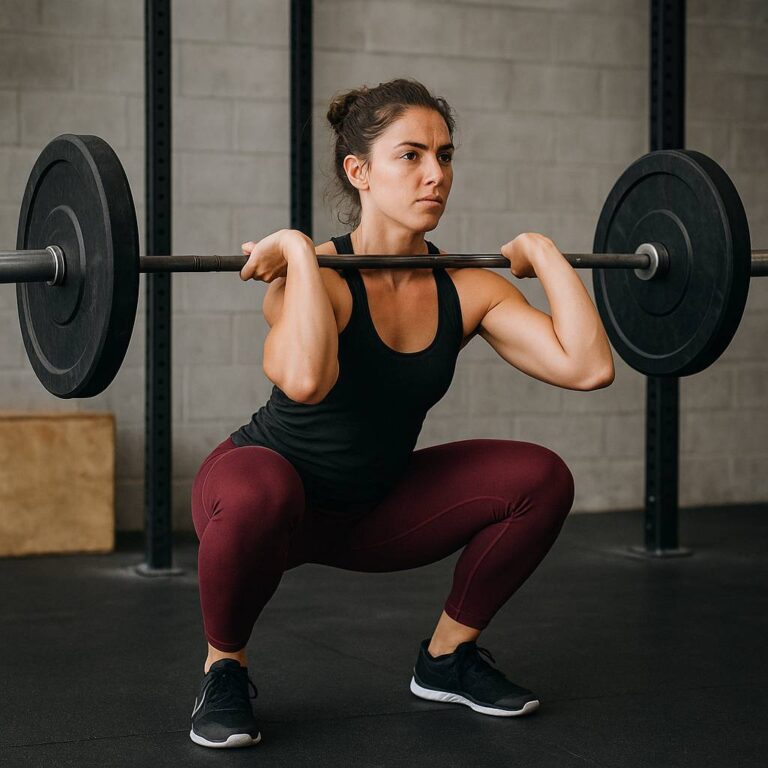
When your hips are stiff, your lower back compensates to reach proper squat depth.
When your shoulders lack stability, other muscles take over during pressing or overhead lifts, creating strain and discomfort.
These patterns can reduce your lifting efficiency and increase the risk of injury.
This is not a reflection of your work ethic or effort.
It is a structural and movement-pattern issue that affects how your body distributes load and moves through space.
Understanding this relationship is the first step toward training smarter and protecting your joints while improving performance.
How Joint Function Impacts Performance
You push through WODs, but your PRs stall, knees ache, and shoulders flare up.
No bueno.
In some fashion, your body is compensating for joints that are either too stiff or too unstable.
When you ignore the specific needs of each joint, you can reduce your efficiency in lifts.
Overhead presses and snatches may feel heavier because your shoulders lack the mobility to move efficiently through full ranges of motion.
Or, your knees or hips may not move well, so you need to produce more force than they necessary to perform repetitions, leading to discomfort or strain over time.
Strength and conditioning gains plateau because your body cannot move optimally through lifts and movements.
All of which play into lackluster performance and a staling or capped performance long term.
Enter: The Joint-by-Joint Approach
The Joint-by-Joint Approach is a framework that explains how each joint in your body has a preferred role, alternating between mobility and stability.
Understanding these roles allows you to train each joint in a way that supports efficient movement and reduces stress.
Your ankles are designed for mobility.
If your ankles are stiff, you may struggle to reach proper squat depth, and your knees and lower back compensate.
Your knees require stability.
Poor knee stability can create tracking issues and knee pain during lifts like squats or lunges.
Your hips require mobility.
Limited hip mobility restricts your ability to perform deadlifts, squats, and lunges effectively, shifting strain to your lumbar spine and knees.
The lumbar spine requires stability to protect your back under load.
Your shoulders need mobility to achieve proper positioning for presses, snatches, and pull-ups, while your scapula and thoracic spine require stability to support shoulder health and movement efficiency.
By addressing joint-specific needs, you reduce the risk of pain and injury, but you also create efficient movement that can perform more repetitions at a faster pace for longer.
Think of how efficiently Rich Fronning, Matt Faser, or Tia Claire-Toomey move.
All of them leak very little energy rep to rep.
This gives them an insane advantage over their competition.
If you do the same, you can lift heavier and move faster.
Applying the Joint-by-Joint Approach in Your Training
You can begin applying the Joint-by-Joint Approach by assessing which of your joints are limited or unstable.
Pay attention to how your body feels during the movements in your training and identify areas where mobility or stability is lacking.
Ideally, you would get assessed by a coach to zero in on which joints aren’t pulling their weight.
Once you know which joints require attention, incorporate targeted mobility and stability exercises.
Focus on mobility exercises for joints designed to move freely and stability exercises for joints that require support.
Integrate these exercises into your warm-ups and accessory work.
You do not need to overhaul your entire program to see improvements.
Personally, I like accessory work paired with main movements.
But even brief, focused sessions targeting joint-specific needs can make a meaningful difference in how your body moves.
Wrapping Up
Learning the joint-by-joint approach completely changed how I view movement and has been the cornerstone of how I help my clients both in person and remotely.
Each joint has a role to play, and when they don’t, bad things occur.
By understanding the joint-specific roles in your body, you can train better, feel better, and perform better almost immediately.
Take the time to assess which joints need mobility or stability work and incorporate targeted exercises into your warm-ups and accessory sessions.
If you found this post helpful and would like to chat about how it can help your training, reply to this email with “JOINT” and let me know!